
SEO vs SEM: What’s the Difference and Which is Better?
In the fast-growing digital world, businesses constantly look for effective ways to increase online visibility, drive website traffic, and generate conversions. Two of the most powerful strategies in digital marketing are SEO vs SEM. Many beginners often confuse these two terms or assume they are the same. However, understanding the difference between SEO vs SEM can help businesses choose the right strategy for long-term success.
In this blog, we will explore SEO vs SEM, their key differences, advantages, disadvantages, and which one is better for your business.
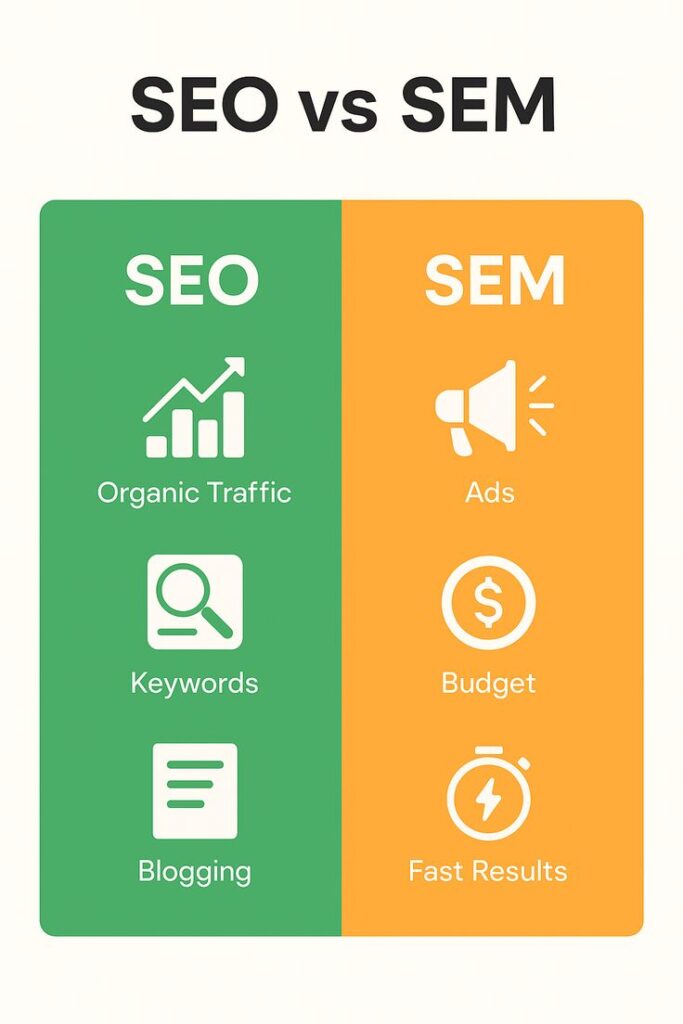
What is SEO?
SEO (Search Engine Optimization) is the process of optimizing a website to rank organically (without paying) on search engines like Google, Bing, and Yahoo. SEO focuses on improving website visibility in unpaid search results.
SEO includes several strategies such as:
- Keyword research
- On-page optimization
- Technical SEO
- Content marketing
- Link building
- Mobile optimization
The main goal of SEO is to rank higher in the search engine results pages (SERPs) and attract consistent organic traffic.
To learn more about SEO fundamentals, you can refer to this beginner guide by Moz:
👉 https://moz.com/beginners-guide-to-seo
What is SEM?
SEM (Search Engine Marketing) is a broader digital marketing strategy that includes paid advertising to increase visibility on search engines. In the comparison of SEO vs SEM, SEM mainly focuses on paid search ads.
The most popular SEM platform is Google Ads, where businesses bid on keywords to show their ads at the top of search results.
SEM involves:
- Paid search ads
- PPC (Pay-Per-Click) campaigns
- Keyword bidding
- Ad copy creation
- Landing page optimization
Unlike SEO, SEM delivers instant visibility and traffic as long as you pay for ads.
You can explore more about SEM here:
👉 https://ads.google.com/home/resources/what-is-sem/
SEO vs SEM: Key Differences
Understanding SEO vs SEM becomes easier when we compare them side by side.
| Feature | SEO | SEM |
|---|---|---|
| Cost | Free (Organic) | Paid (PPC) |
| Traffic | Organic Traffic | Paid Traffic |
| Time to See Results | Slow (3–6 months) | Immediate |
| Sustainability | Long-term | Short-term |
| CTR | Higher trust | Depends on ad copy |
| ROI | High over time | Quick but expensive |
When discussing SEO vs SEM, the biggest difference lies in cost and speed. SEO requires time and effort, while SEM requires budget but delivers faster results.
How SEO Works
SEO works by optimizing your website according to search engine algorithms. Search engines like Google use bots (crawlers) to index and rank web pages based on relevance, authority, and user experience.
SEO has three major components:
1. On-Page SEO
- Keyword optimization
- Meta titles and descriptions
- Header tags
- Internal linking
- Image optimization
2. Off-Page SEO
- Backlink building
- Guest posting
- Social signals
3. Technical SEO
- Website speed optimization
- Mobile responsiveness
- XML sitemap
- Robots.txt
For technical SEO insights, check Search Engine Journal:
👉 https://www.searchenginejournal.com/technical-seo/
How SEM Works
SEM works through paid advertisements. Businesses bid on keywords and create ads that appear above organic search results.
For example, when someone searches for “best digital marketing agency,” paid ads usually appear at the top before organic listings.
SEM includes:
- Keyword bidding
- Budget allocation
- Ad extensions
- A/B testing
- Conversion tracking
SEM is ideal for:
- Product launches
- Seasonal campaigns
- Limited-time offers
- Immediate traffic needs
In the debate of SEO vs SEM, SEM is best for quick results, while SEO builds long-term brand authority.
Advantages of SEO
When comparing SEO vs SEM, SEO offers several long-term benefits:
- Cost-effective in the long run
- Builds brand credibility
- Generates sustainable traffic
- Higher click-through rates
- Improves user experience
Although SEO takes time, once your website ranks well, you can receive consistent traffic without paying per click.
Advantages of SEM
In the SEO vs SEM comparison, SEM provides:
- Immediate visibility
- Highly targeted audience
- Quick lead generation
- Measurable results
- Better for competitive keywords
SEM is particularly useful for new businesses that cannot wait months for SEO results.
SEO vs SEM: Which is Better?
Now the big question: SEO vs SEM – which is better?
The answer depends on your goals, budget, and timeline.
Choose SEO if:
- You want long-term growth
- You have a limited budget
- You want to build brand authority
- You focus on content marketing
Choose SEM if:
- You need quick traffic
- You are launching a new product
- You want instant leads
- You have an advertising budget
In reality, the best strategy is not SEO vs SEM, but combining both. Many successful businesses use SEO for organic growth and SEM for immediate conversions.
Combining SEO and SEM for Maximum Results
Instead of choosing between SEO vs SEM, smart marketers integrate both strategies.
Here’s how:
- Use SEM to test high-performing keywords.
- Use SEO to rank organically for those keywords.
- Run paid ads while your SEO campaign builds authority.
- Retarget visitors using paid campaigns.
According to HubSpot, businesses that align paid and organic strategies improve overall marketing performance.
👉 https://blog.hubspot.com/marketing/seo-vs-sem
By combining SEO vs SEM, businesses can dominate search engine results and maximize ROI.
Common Mistakes in SEO vs SEM
When implementing SEO vs SEM strategies, avoid these common mistakes:
- Ignoring keyword research
- Not tracking conversions
- Poor landing page optimization
- Stopping SEO too early
- Spending too much without ROI analysis
Tracking tools like Google Analytics and Google Search Console help monitor performance and optimize campaigns.
Final Thoughts
Understanding SEO vs SEM is essential for any business looking to grow online. SEO focuses on organic, long-term visibility, while SEM delivers immediate, paid traffic. Both strategies have unique strengths and limitations.
If you are looking for sustainable growth and authority, SEO is the better long-term option. If you need fast results and targeted leads, SEM is the right choice. However, the smartest approach is combining SEO vs SEM to create a powerful, balanced digital marketing strategy.
By leveraging both organic and paid search marketing, businesses can increase traffic, improve conversions, and stay ahead of competitors in 2026 and beyond.
Contact us: https://chithrajagadish.in/professional-seo-services-that-drive/