
Social Media Content Plans: The Ultimate Guide to Growing Your Brand Online
In today’s competitive digital landscape, posting randomly on social platforms is no longer enough. Businesses that achieve consistent engagement, traffic, and conversions rely on well-structured Social Media Content Plans to guide their strategy. A clear plan ensures your brand voice stays consistent, your campaigns align with business goals, and your audience receives valuable content at the right time.
This in-depth guide explains what Social Media Content Plans are, why they matter, how to create them step-by-step, and which tools can help you execute effectively.
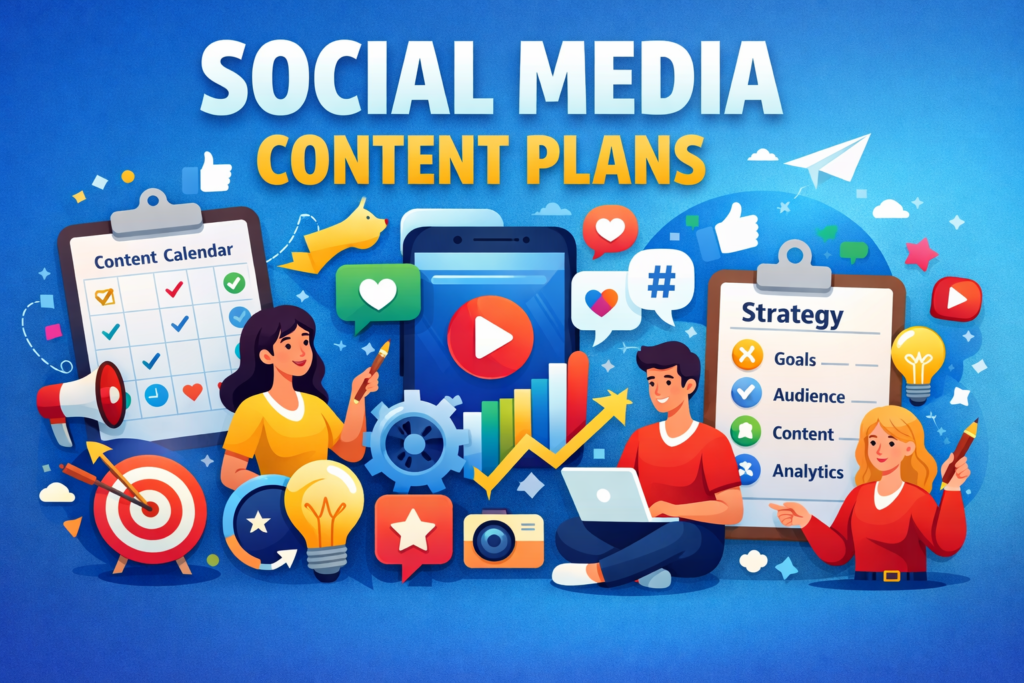
What Are Social Media Content Plans?
Social Media Content Plans are documented strategies that outline what you will post, when you will post it, and why it supports your marketing objectives. They include content themes, formats, posting schedules, platform-specific tactics, and performance metrics.
Unlike a simple calendar, these plans connect creativity with data—helping brands move from reactive posting to proactive growth.
Why Social Media Content Plans Matter
A strong planning framework delivers several advantages:
- Consistency: Maintains brand tone and messaging.
- Efficiency: Saves time by batching content creation.
- Audience Growth: Targets the right users with relevant posts.
- Campaign Alignment: Supports promotions, launches, and seasonal events.
- Performance Tracking: Makes it easier to analyze results and optimize.
According to marketing insights shared by HubSpot, documented strategies significantly increase the chances of success in digital campaigns: https://www.hubspot.com/marketing.
Key Elements of High-Performing Social Media Content Plans
To succeed, your Social Media Content Plans should include the following components:
1. Clear Goals
Define what you want to achieve—brand awareness, website traffic, lead generation, or sales. Each post should support at least one objective.
2. Target Audience Personas
Understand demographics, interests, pain points, and preferred platforms. This ensures your messaging resonates with the right users.
3. Platform-Specific Strategy
Different platforms reward different formats:
- Instagram & TikTok: Reels, Stories, short videos
- LinkedIn: Thought leadership, case studies
- X (Twitter): Updates, threads, news
- Facebook: Community posts, videos, links
Your Social Media Content Plans should adapt to each channel rather than repeating identical posts everywhere.
4. Content Pillars
Content pillars are recurring themes such as:
- Educational tips
- Product highlights
- Customer testimonials
- Industry news
- Behind-the-scenes
These pillars keep your feed balanced and engaging.
5. Posting Frequency & Timing
Research when your audience is most active and schedule posts accordingly. Tools like Hootsuite (https://www.hootsuite.com) and Sprout Social (https://sproutsocial.com) provide analytics to guide timing decisions.

Step-by-Step Guide to Creating Social Media Content Plans
Step 1: Audit Existing Content
Review your current profiles. Identify which posts perform best and which platforms deliver the highest ROI.
Step 2: Research Competitors
Analyze what competitors post, how often, and what drives engagement. This helps refine your Social Media Content Plans and uncover gaps in your niche.
Step 3: Choose Formats
Mix different content types:
- Short-form videos
- Carousel posts
- Infographics
- Polls & quizzes
- Blog links
- User-generated content
Step 4: Build a Monthly Calendar
Create a calendar mapping dates, platforms, captions, hashtags, visuals, and CTAs. This is the execution engine of your Social Media Content Plans.
Step 5: Create & Batch Content
Design graphics, record videos, and write captions in advance to maintain consistency—even during busy weeks.
Step 6: Schedule & Publish
Use automation tools like Buffer (https://buffer.com) to queue posts and reduce manual work.
Step 7: Measure & Optimize
Track metrics such as reach, impressions, clicks, saves, shares, and conversions. Update your Social Media Content Plans monthly based on what works best.
Best Practices for Successful Social Media Content Plans
- Follow the 80/20 rule: 80% value-driven content, 20% promotional.
- Use strong CTAs: Encourage comments, shares, and website visits.
- Leverage trends carefully: Adapt trending audio or topics to your brand.
- Maintain visual consistency: Fonts, colors, and layouts build recognition.
- Repurpose content: Turn blogs into reels or webinars into carousel posts.
Common Mistakes to Avoid
Even strong brands can struggle if their Social Media Content Plans contain these errors:
- Posting without goals
- Ignoring analytics
- Over-promoting products
- Using the same content everywhere
- Skipping engagement and community replies
Avoiding these pitfalls ensures sustainable growth.
How Social Media Content Plans Drive SEO & Website Traffic
While social media is not a direct ranking factor, strategic posting increases brand searches, backlinks, and referral traffic—all of which support SEO. Sharing blog articles, lead magnets, and landing pages through your Social Media Content Plans amplifies reach and authority over time.
For more insights into digital strategy integration, Moz offers valuable resources: https://moz.com.
Final Thoughts
Well-structured Social Media Content Plans are essential for brands that want predictable growth, stronger engagement, and higher marketing ROI. By setting goals, understanding audiences, using the right tools, and reviewing performance regularly, businesses can turn social platforms into powerful revenue drivers.
If you’re serious about scaling your online presence in 2026 and beyond, start building data-driven Social Media Content Plans today—and watch your brand visibility multiply.